Mite damage is one of the major threats facing China's crops, affecting six major agricultural production regions including South China, Central China, and East China. It causes annual agricultural economic losses of over 10 billion yuan, endangers more than 100 million mu of cultivated land, and the situation of prevention and control is extremely severe.
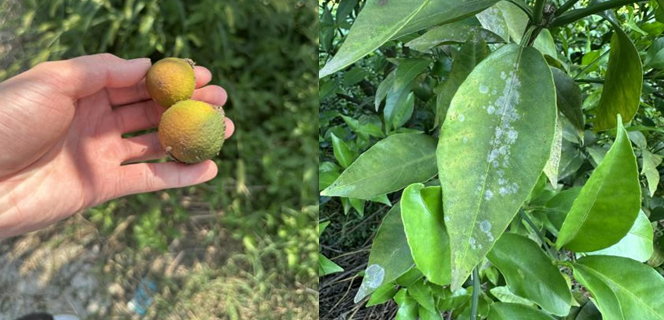
"Can we develop a new type of acaricide that is highly effective, low-toxic, and affordable?" Wu Yihan, a student from East China University of Science and Technology (ECUST), was deeply moved when she witnessed rapeseed fields suffering from severe mite infestations during her hometown practice in her first year of college. The rapeseed leaves had become mottled, yellowed, and withered due to the rampant mites, eventually leading to reduced yields or even total crop failure. After returning to school, she set up the "Yun'an Practice Team".
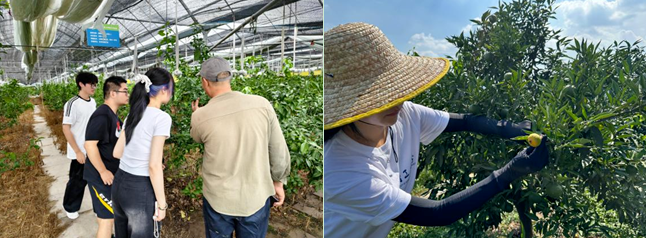
The team traveled to Shanghai, Jiangxi, Chongqing, Anhui and other regions to conduct in-depth research. Through communication with farmers, they accurately identified three core pain points of traditional acaricides: the increasing resistance of harmful mites, the ecological damage caused by the toxicity of pesticides, and the heavy financial burden on farmers due to high costs. To address these issues, the "Yun'an Practice Team" joined the university's green pesticide innovation team. Under the professional guidance of their mentors, team members collaborated closely and worked arduously for several years. Utilizing AI-assisted pesticide molecular design, they innovatively introduced trifluoromethylthio groups into molecules, synthesized hundreds of compounds, and conducted over 300 experimental screenings. Eventually, they successfully developed a new acaricide with significant advantages (tentatively named "Spiroflumite"), achieving three major technological leaps:
- A substantial improvement in acaricidal efficacy: Its acaricidal activity, especially against resistant mites, is over 160 times higher than that of existing mainstream commercial pesticides.
- Excellent ecological safety: It exhibits low toxicity to mammals and non-target organisms such as fish and bees, with high environmental compatibility.
- Revolutionary innovation in production 工艺: The team developed an efficient "one-step substitution reaction" process, which greatly simplifies the production 流程 and significantly reduces costs.
It is reported that the team has published 5 SCI papers in internationally renowned journals and applied for 5 national invention patents, laying a solid theoretical foundation for its technological innovation and market application. The great potential of the project was also verified in the 2025 China International College Students' Innovation and Entrepreneurship Competition, where it won the Shanghai Gold Award. Currently, the team is conducting in-depth industry-academia-research-application cooperation with leading pesticide enterprises such as Nantong Taihe Chemical Co., Ltd. to actively promote the industrialization process. Wu Yihan, the team leader, stated that they hope to promote "Spiroflumite" to more farmlands across the country in the future, effectively helping farmers control mite damage efficiently, reduce economic losses, ensure the quality and safety of agricultural products, assist rural revitalization through technological innovation, and serve the national strategy of reducing pesticide use and increasing efficiency.
Pesticide science at East China University of Science and Technology is a key discipline in Shanghai and houses the only doctoral program in plant protection (first-level discipline) in Shanghai. For a long time, the ECUST Green Pesticide Innovation Team has adhered to the original mission of "taking moral education as the foundation and strengthening agriculture and revitalizing rural areas as the mission". It closely integrates high-level scientific research with high-quality talent cultivation. Relying on major scientific research projects such as the National Key R&D Program and high-level scientific research platforms such as the State Key Laboratory of Bioreactor Engineering, the team has successively developed piperidine and epoxy insectidine, obtained official national registration for new pesticides, and become landmark achievements in China's independently developed insecticides. Under the guidance of team teachers, students have won 1 national silver award and 2 Shanghai gold awards in high-level competitions such as the "Challenge Cup" and China International College Students' Innovation Competition.

