


Sodium percarbonate, an inorganic compound, is a strong oxidant with the chemical formula of 2Na2CO3·3H2O2. It is a white crystalline powder and can release oxygen when exposed to moisture. Sodium percarbonate is the addition compound of hydrogen peroxide and sodium carbonate, mainly used as bleaching agent and oxidant, as well as stain remover, cleaning agent and fungicide in chemical industry, paper making, textile, dyeing and finishing, food, medicine, health and other departments.
Chinese name: sodium percarbonate
Sodium Percarbonate (SPC)
Alias: sodium peroxide carbonate, solid hydrogen peroxide
Chemical formula: 2Na2CO3·3H2O2
Molecular weight: 314.021
CAS Accession number: 15630-89-4
EINECS Accession number: 239-707-6
Boiling point: 333.6 ℃
Water soluble: 150 g/L
Appearance: white crystalline powder
Flash point: 169.8 ℃
Security description: S17; S26; S37/39
Hazard symbol: Xn
Hazard description: R8; R22; R36/38
UN Dangerous Goods number: 1479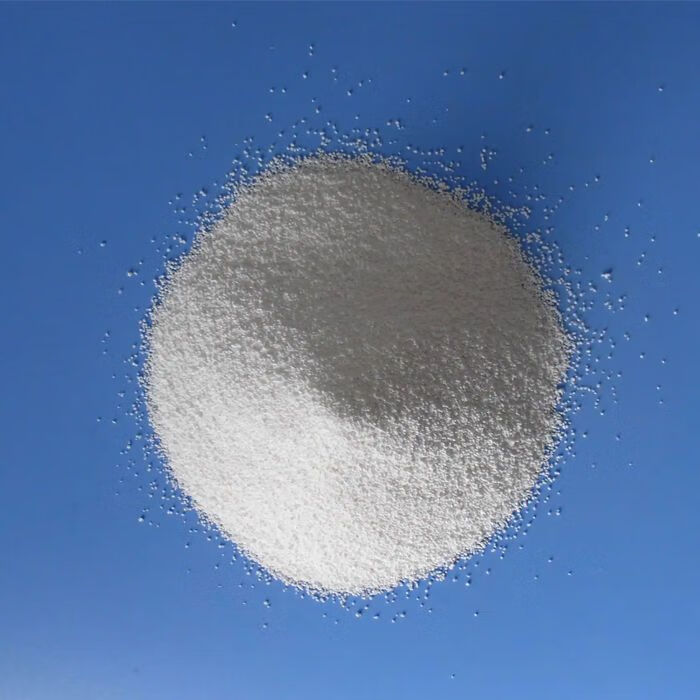
Product Purpose
In the textile industry as bleaching agent, reducing color agent, can also be used alone as disinfectant, deodorant, milk preservative, etc. Sodium percarbonate has the advantages of non-toxic, odorless, pollution-free, bleaching, sterilization, washing, good water solubility and so on. Sodium percarbonate is usually used as an auxiliary agent for laundry detergent, which has the effect of aerobic bleaching, and can effectively increase dissolved oxygen in fish pond management. In terms of commercial use, sodium percarbonate is usually coated with substances such as sulfate and silicate to improve the storage stability requirements of laundry detergent formula. The traditional detergent bleaching agent is sodium perborate. The advantage of sodium percarbonate lies in the stability of storage and good compatibility with other detergent ingredients, which is incomparable and irreplaceable. In terms of chemical structure, their essential difference lies in the existence of sodium percarbonate as an adduct, while sodium perborate is the product of peptide bond.
Chemical products
Sodium percarbonate is commonly known as solid hydrogen peroxide. Hydrogen peroxide (H2O2), commonly known as hydrogen peroxide, is a colorless liquid at room temperature, it is difficult to ionize, easy to decomposition. As a classic chemical product, the industry began to produce as early as one hundred years ago. With the growth of social demand, especially the need of ecological environmental protection, hydrogen peroxide has been more valued by people in recent years, and is known as the "green oxidant". For the convenience of storage, transportation and use, alcohol precipitation is used in industry to convert it into solid sodium percarbonate crystal (chemical formula: 2Na2CO3·3H2O2), which has the dual nature of Na2CO3 and H2O2. The production process of alcohol precipitation is as follows: At 0 ~ 5℃, H2O2 and hydrogen peroxide stabilizer (compound stabilizer sodium silicate +EDTA (mass ratio 2:1), w=0.35% ~ 0.45%, or sodium silicate + magnesium sulfate +EDTA (mass ratio 1:1:1), w=0.35% ~ 0.45%) were added to saturated Na2CO3 solution. After full reaction, isopropyl alcohol is added, filtered and separated to obtain sodium percarbonate crystals. After treatment, granular oxygen, namely solid granular oxygen, can be obtained, which is used for three-dimensional oxygen enhancement in fish ponds to purify water quality. The multi-function of detergent, that is, in the washing and decontamination at the same time, both bleaching, sterilization, disinfection and other functions, has become the development trend of detergent, many foreign detergents are added to the bleaching effect of the components, the domestic has gradually developed to this aspect. Because sodium percarbonate is tasteless and non-toxic, it is easy to dissolve in cold water and has strong decontamination power. After dissolving in water, it can release oxygen and play a variety of functions such as bleaching and sterilization, which is in line with the development trend of modern detergents. Sodium perborate is commonly used in traditional powder detergents, but it has disadvantages such as slow dissolution speed, high price and the effect of boron on crops. Sodium percarbonate has lower cost than sodium perborate, good solubility, suitable for use in cold areas and winter, and will not cause harm to crops. Therefore, sodium percarbonate is increasingly used in detergent production. At present, sodium percarbonate has been widely used as household and industrial washing, bleaching, fungicide, used in synthetic fiber, animal fiber, synthetic resin fiber, pulp fat and other production fields. Good bleaching effect, no damage to the fabric, no yellowing.
Auxiliary detergent for washing
For example, Japan heavy scale color bleaching washing powder, sodium percarbonate added 10% (mass fraction, the same below); Foreign common enzyme bleaching detergent, adding 8%; Japan new detergent for stain removal, adding 20%; China uses dustproof bleached laundry powder, adding 8%. Since the 1980s, the demand for detergents in the western industrial developed countries has grown at an average annual rate of 10%. In China, the application of sodium percarbonate in the production of detergents is in its infancy. Some manufacturers have begun to combine sodium percarbonate with other effective detergents to make efficient detergents or color bleaching washing powders for sale, but the quantity is small. Although the stability of industrial sodium percarbonate stored alone in China has been improved at present, the compatibility with the components of laundry powder used today is not good. When sodium percarbonate is added to laundry powder, the high water content of laundry powder or the existence of some components and impurities that can cause the decomposition of sodium percarbonate will cause the decomposition of sodium percarbonate. The current problem has attracted great attention from manufacturers. Research and production of wrapped sodium percarbonate products began. At present, detergent manufacturers face fierce market competition, and also hope to add sodium percarbonate to improve product performance, especially the production of low-phosphorus or phosphate-free laundry detergent. By adding sodium percarbonate, the products can be developed towards high-end, non-toxic and multi-functional. China is a big country of detergent production, the current production capacity has reached more than 220,000 t/a, if calculated according to 5% of the amount added, only the detergent industry needs to consume 100,000 t of sodium percarbonate every year, it can be seen that China's sodium percarbonate market has huge potential.
Medical and health care
Sodium percarbonate is mixed with solid substance containing polyethylene acid and Cu, Fe, Co, Mn and any compound catalyst. When oxygen is used in first aid, oxygen can be decomposed by adding appropriate amount of water, which is simple and convenient and has large oxygen supply. This oxygen source is suitable for families (especially rural families), military, underground construction and mining, flood fighting, fire relief and other first aid occasions, is a kind of excellent performance of first aid oxygen supply agent. According to conservative estimates, the sodium percarbonate used for medical oxygen supply in Beijing and Tianjin alone needs about 400 tons/year, and part of the exported sodium percarbonate is also used for this purpose. Sodium percarbonate is also a kind of disinfectant, can kill Escherichia coli, staphylococcus, hepatitis virus and other common bacteria. It can be used in hospitals and public places as a disinfectant, denture cleaner, tableware and fruit disinfectant, soap disinfectant, etc.
Other
Sodium percarbonate can be used for food preservation and disinfection, 1% sodium percarbonate aqueous solution can make fruits and vegetables stored for 4-5 months without deterioration. It has been widely used in the food industry in the West, and China has also formulated the industry standard of food additive sodium percarbonate according to the standards of the Food and Agriculture Organization of the United Nations, so as to better guide enterprises to use sodium percarbonate, so as to promote its consumption in the food industry. In addition, sodium percarbonate can replace calcium peroxide as an oxygen producing agent in aquaculture industry, and the oxygen release rate is significantly higher than that of calcium peroxide, and can provide oxygen for fish, shrimp, crabs and other organisms in the process of storage and transportation. With the continuous development of aquaculture in our country, the dosage of sodium percarbonate in this aspect will increase year by year. Sodium percarbonate can be used as textile, printing and dyeing finishing agent, unlike chlorine bleaching, it is easy to fade and other shortcomings, suitable for chlorine bleaching of synthetic fiber, animal fiber, synthetic resin fiber and fluorescent whitening agent treated fiber bleaching finishing. Sodium percarbonate can be used as an oxidant in the reaction of aldehyde group conversion to phenolic hydroxyl group, oxidation of organoborane, nitrile hydrolysis, oxidation of thioether and amine, epoxidation of olefin, oxidation of keto, oxidation of α-diketone fracture and so on. In addition, sodium percarbonate can also be used as metal surface treatment agent, electroplating detergent, sewage treatment agent and polymer polymerization control agent.
Packing Specification
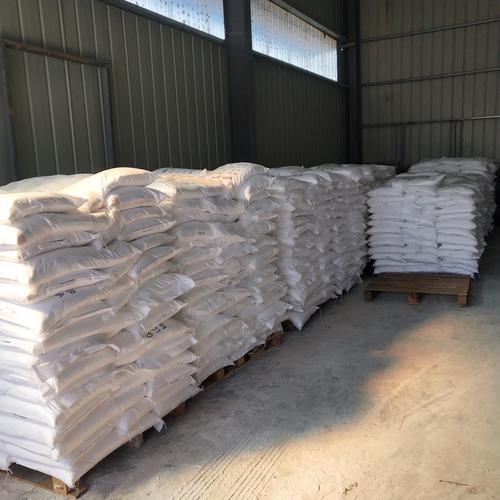
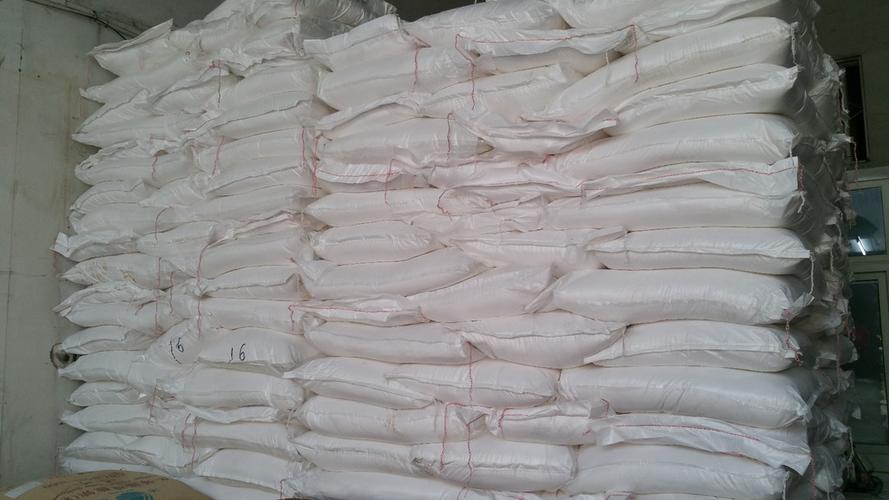
25kg*1080bags
27ton/FCL
The room temperature was below 40°C and the relative humidity was kept below 75%.
Pay attention to moisture and rain. Keep the container sealed and see that the label is intact. Handling should be carried lightly to prevent damage to the packaging and container, and pay attention to the normal pressure discharge of the container. It is not suitable for transportation in rainy days.
It should be stored separately from flammable or combustible substances, reducing agents, sulfur and phosphorus, and should not be mixed for storage and transportation. Avoid contact with other substances that may cause product decomposition.
Protective Measures
Keep indoor air unobstructed and equipped with air circulation devices. Avoid dust and aerosol, do not operate in a closed space, frequent observation should be made to determine the contact hazard value, keep the contact hazard value under the protection standard value. Under normal circumstances, no special protection is required, but when the working environment is uncertain or dusty, or the degree of environmental harm exceeds the upper limit, air breathing apparatus, self-contained breathing apparatus, oxygen breathing apparatus, filter gas mask (half, full cover) dust mask and other protective equipment should be used, and chemical safety protective eyes and protective mask should be worn. Avoid skin contact with the product and wear chemical protective gloves (recommended materials: PVC, neoprene, etc.). Choose to wear all kinds of protective clothing according to the specific situation. Protective facilities include: eye washers, safe shower rooms, anti-gas penetration overalls, rubber boots. Wash hands and other body contact parts with soap and water after work and before meals. Wash chemicals off your body before eating or smoking. Outer packaging disposal method for handling in accordance with relevant government regulations, empty and clean the container, and then dispose in accordance with relevant government regulations.
Our chemicals
Company Introduction
Shandong DESENLAI Chemical Co., Ltd. was established in July 2011, headquartered in Tianqiao District, Jinan City, Shandong Province.
With more than ten years of fine chemical business foundation, DSL Chemical is committed to building the most valuable chemical trading company in the whole industrial chain in China. With advanced marketing concept combined with modern management mode, the company provides customers with quality products and services and comprehensive "all-around" solutions.
The company adheres to the goal of green and sustainable development, and has long been committed to the operation of various fine chemical products, involving lithium new energy, biodegradable materials and other green energy fields. Such as NMP, butyrate, BDO, adipic acid, glycol and so on.


