


Product Information
Aniline was first isolated from the destructive distillation of indigo in 1826 by Otto Unverdorben. In 1834, Friedrich Runge isolated from coal tar a substance which produced a beautiful blue color on treatment with chloride of lime; this he named kyanol or cyanol. In 1841, C. J. Fritzsche showed that by treating indigo with caustic potash it yielded an oil, which he named aniline, from the specific name of one of the indigo-yielding plants, Indigofera anil, anil being derived from the Sanskrit, dark-blue.
Aniline, also known as anilin oil, aminobenzene, heating to 370°C decomposition. Slightly soluble in water, soluble in ethanol, ether and other organic solvents.
Aniline is one of the most important amines. Mainly used in the manufacture of dyes, pharmaceuticals, resins, but also can be used as rubber curing accelerator. It can also be used as a black dye itself. Its derivative methyl orange can be used as an indicator for acid-base titration.
|
Chinese name |
苯胺 |
English name |
Aniline oil |
|
Abbreviation |
/ |
CAS no. |
62-53-3 |
|
Molecular formula |
C6H7N |
Relative molecular weight |
93.14 |
|
Melting point |
-6.2℃ |
The boiling point |
184.4℃ |
|
Relative density |
1.0217 |
Appearance |
A colorless to pale yellow transparent liquid |
|
Type of hazard |
Class 6.1 Poison |
Hazard symbol |
R23/24/25;R40;R41;R43;R48/23/24/25;R50;R68 |
|
Toxicity classification |
Highly toxic |
Hazard description |
Flammable, its vapor and air mixture, can form an explosive mixture |
|
Security description |
S26;S27;S36/37/39;S45;S46;S61 |
The transport number of dangerous goods |
|
Packing Specification
200KG*80 DRUMS,16TON/FCL;
24~25TON/ISOTANK;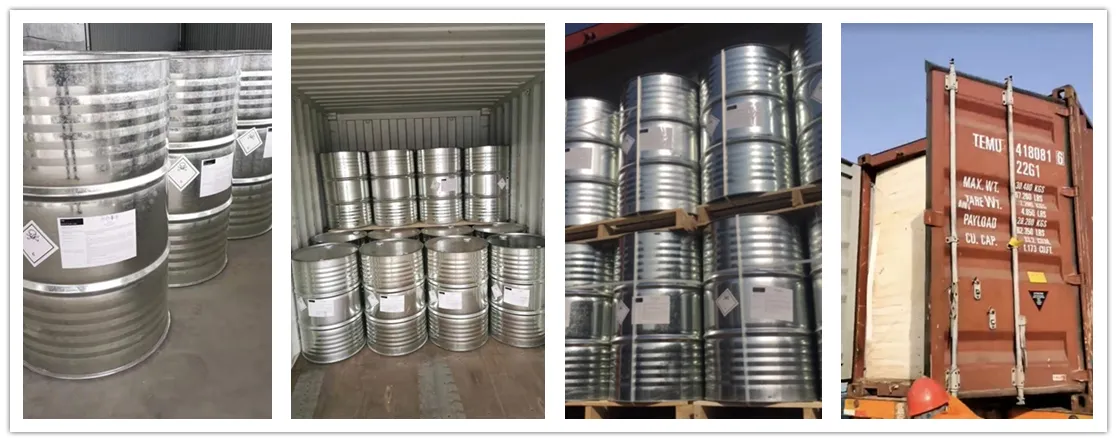
Operation and storage
Operational considerations: closed operation, to provide adequate local ventilation. The operation should be as mechanical and automatic as possible. Operators must be specially trained and strictly abide by the operating procedures. Operators are advised to wear filter gas mask (half mask) , safety glasses, wear anti-gas penetration work clothes, wear rubber oil-resistant gloves. Keep away from kindling and heat source. Smoking is strictly prohibited in the workplace. Use explosion-proof ventilation systems and equipment. Prevent steam from leaking into the air of the workplace. Avoid contact with oxidants and acids. When handling to light loading and unloading, to prevent packaging and container damage. Equipped with the corresponding variety and quantity of fire-fighting equipment and leakage emergency treatment equipment. Emptied containers may leave harmful residues.
Storage notes: store in a cool, ventilated warehouse. Keep away from fire and heat. The temperature should not exceed 30 ° C and the relative humidity should not exceed 80% . Keep away from light. The packing shall be sealed and shall not be in contact with air. Should be stored separately from oxidants, acids, edible chemicals, avoid mixed storage. Equipped with the corresponding variety and quantity of fire-fighting equipment. The storage area shall be equipped with leak emergency treatment equipment and appropriate storage materials.
First Aid measures
Skin contact: immediately remove contaminated clothing and rinse skin thoroughly with soap and water. Seek medical attention.Eye Contact: lift eyelids immediately and rinse thoroughly with plenty of running water or saline for at least 15 minutes. See a doctor.Inhalation: remove quickly from the scene to fresh air. Keep the airway clear. If breathing is difficult, give oxygen. If breathing stops, give mouth-to-mouth immediately. See a doctor.Ingestion by mistake: drink plenty of warm water, vomiting. See a doctor.
Emergency handling
Immediately evacuate personnel from the contaminated spill area to the safe area, and quarantine, strictly restrict access. Cut The fire. Emergency personnel should wear self-contained positive pressure breathing apparatus and wear protective clothing. Do not come into direct contact with the spill. Cut off the source of the leak if you can. To prevent the inflow of sewage, drainage ditch, and other restricted space.
Small leakage: adsorption with sand or other non-combustible materials.
Mass leakage: building an embankment or digging a pit for shelter. Spray water or foam to cool and dilute steam and protect site personnel. Transfer by pump to a tank car or special collector for recovery or transport to a waste disposal site for disposal.
Application
Aniline is mainly used for the preparation of methylene dianiline and related compounds by condensation with formaldehyde. The diamines are condensed with phosgene to give methylene diphenyl diisocyanate, a precursor to urethane polymers. · Other uses include rubber processing chemicals (9%), herbicides (2%), and dyes and pigments (2%). · As additives to rubber, aniline derivatives such as phenylenediamines and diphenylamine, are antioxidants. · Illustrative of the drugs prepared from aniline is paracetamol (acetaminophen, Tylenol). The principal use of aniline in the dye industry is as a precursor to indigo, the blue of blue jeans.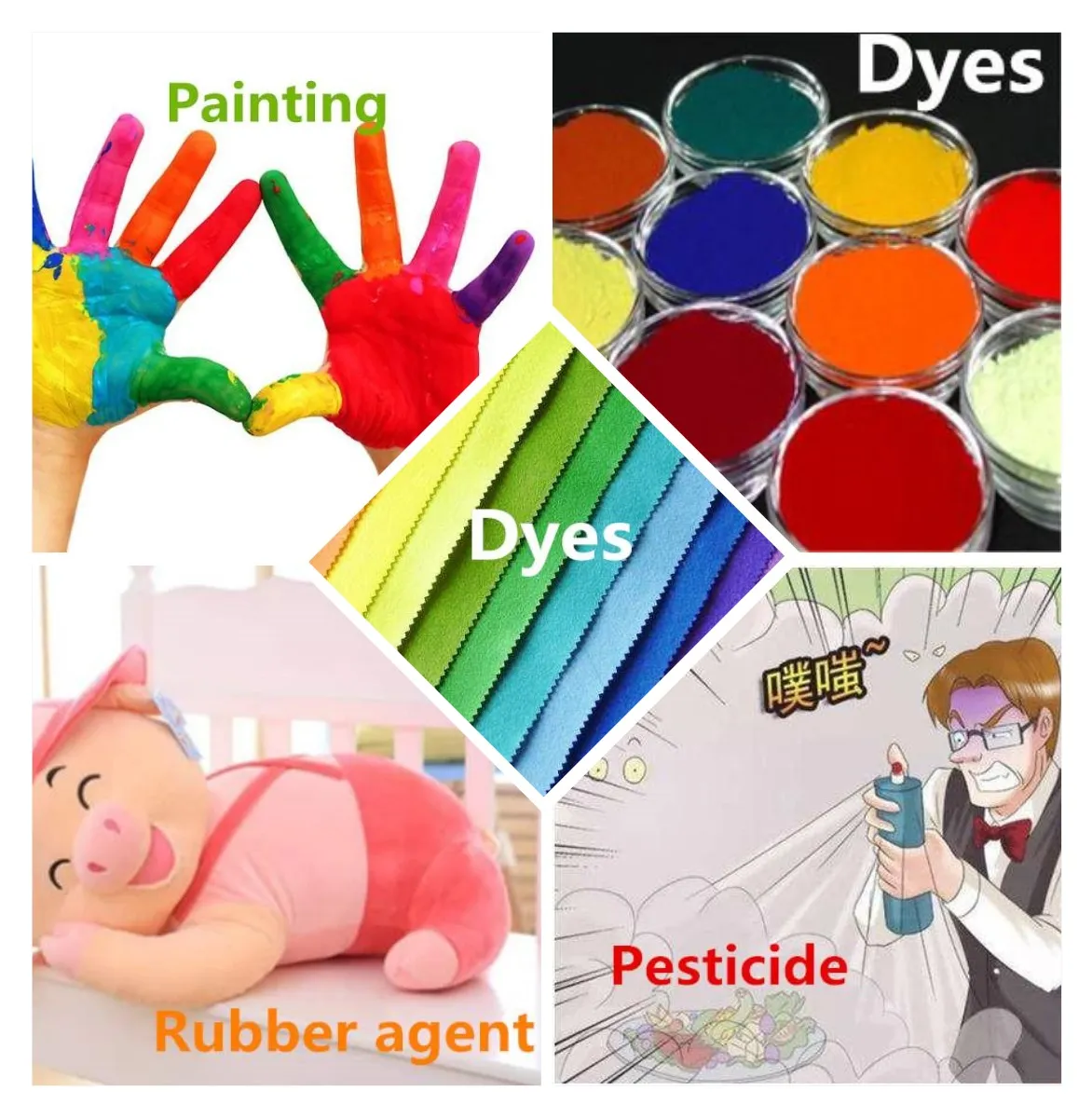
Certifitate Of Analysis OF Aniline Oil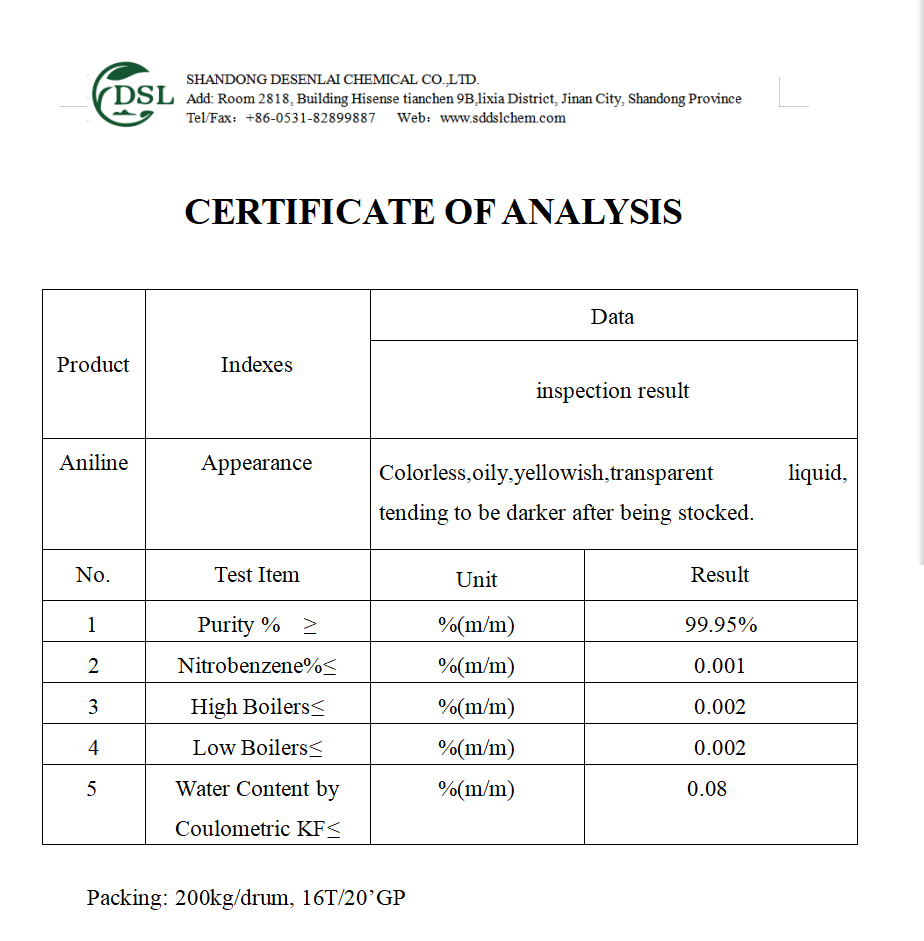
Our chemicals:
Company Introduction
Shandong DESENLAI Chemical Co., Ltd. was established in July 2011, headquartered in Tianqiao District, Jinan City, Shandong Province.
With more than ten years of fine chemical business foundation, DSL Chemical is committed to building the most valuable chemical trading company in the whole industrial chain in China. With advanced marketing concept combined with modern management mode, the company provides customers with quality products and services and comprehensive "all-around" solutions.
The company adheres to the goal of green and sustainable development, and has long been committed to the operation of various fine chemical products, involving lithium new energy, biodegradable materials and other green energy fields. Such as NMP, butyrate, BDO, adipic acid, glycol and so on.


