Glycine, also known as amino acetic acid, amino acetic acid. Physical and chemical properties: white monoclinic crystal system or hexagonal crystal, or white crystalline powder, odorless, with special sweetness.
There are many production processes of glycine, and the main production processes with industrial production prospects include ammoniolysis of chloroacetic acid, synthesis of glycine by hydrogen cyanide, Strecker process and biosynthesis. At present, the main technology of chloro-acetic acid ammoniolysis in China is the reaction of acetic acid and chlorine to produce chloroacetic acid, and chloroacetic acid and ammonia can generate glycine and ammonium chloride under the catalytic action of ulotropin, and qualified glycine can be prepared by cooling crystallization, adding methanol to separation, filtration, centrifugation and drying.
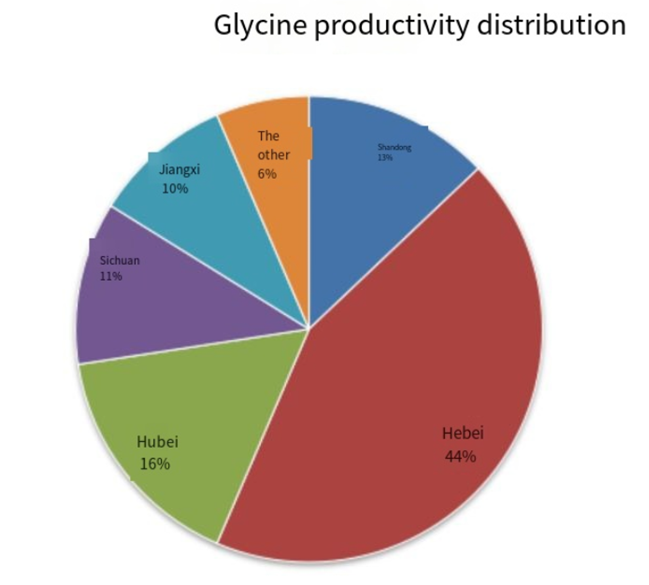
The total domestic production capacity of glycine is about 600,000 tons, mainly distributed in Hebei, Shandong, Sichuan, Hubei and other places, of which the supporting downstream (glyphosate) production capacity is 200,000 tons. In recent years, with the increase in demand for food-grade glycine, industrial grade glycine deep processing capacity to food-grade has increased year by year, and the current food-grade glycine production capacity is 80,000 tons, accounting for 13%.
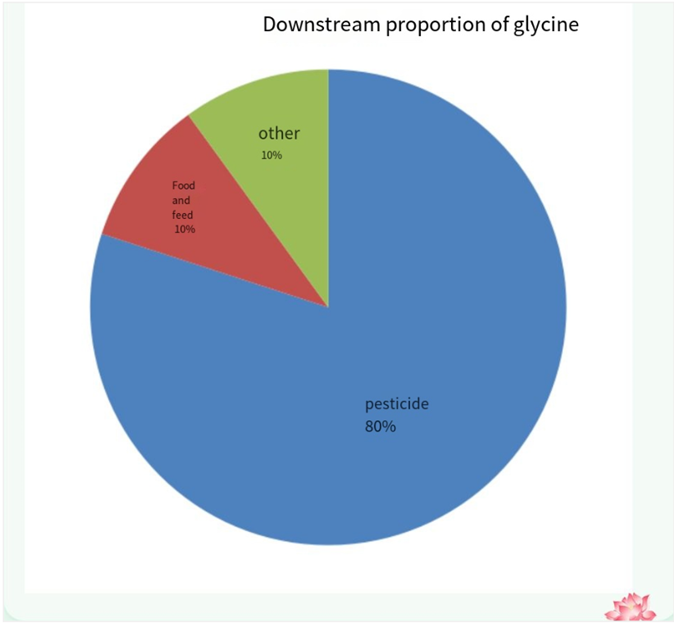
As the downstream glycine of acetic acid, is an important fine chemical intermediate, widely used in medicine, food, pesticides, feed and other industries, 80% of which is used in pesticide production.
 One: Medicine
Glycine is an essential amino acid for human body, and it is basically contained in various amino acid infusion formulas. Glycine can be used as drug solvent and buffer. Glycyrrhizic acid is also commonly used as an acid-making agent and detoxifying agent; In drug synthesis, glycine, as an important pharmaceutical intermediate, can prepare various effective drugs.
Two: food
Glycine added to food can increase the content of amino acids in food, improve the nutritional composition; At the same time, it can also be used as condiment, preparation of refreshing drinks; Glycine alone as a sweet, can be used in the production of candy and cookies; At the same time, glycine can be used as a food antioxidant and preservative to extend the shelf life of food, so it is widely used in beverages, dairy products, canned and pickled foods.
Three: pesticide
Pesticide is a large area of consumption of glycine. Glyphosate, a phosphine preparation synthesized from glycine as starting material, is a highly effective herbicide with low residual toxicity. Glyphosate has a global production capacity of about 1.2 million tons, including 750,000 tons in China, 360,000 tons in Monsanto in the United States, 90,000 tons in other regions, and global glyphosate consumption of about 900,000 tons, maintaining a steady growth at a low speed.
Four: feed
Glycine is used in feed additives, which is not only the main nutritional supplement in livestock and poultry feed, but also can prevent feed oxidation deterioration and extend feed freshness.
Five: Other aspects
Glycine can be used as solvent for organic synthesis, biochemical reagent, carbon dioxide removal solvent in fertilizer industry, preparation of surfactants. Glycine and advanced fatty acid salt can be compounded to prepare high-grade detergent, glycine is also widely used in daily chemical industry, to prepare hair dye, cleaning supplies, cosmetics and so on. 
 One: Medicine


